

When preparing a fashion lookbook, I care more about whether viewers can see the garment's character: whether the knit is substantial, the shirt holds its shape, and where a long dress begins to drape. A small movement of the hem can communicate a lot. Bigger movement also makes fabric texture, the person's silhouette, and garment construction harder to check.
The images throughout this article are visual references for composition, material, lighting, and production rhythm. They are not Kling 4.0 generated samples or records of personal tests.
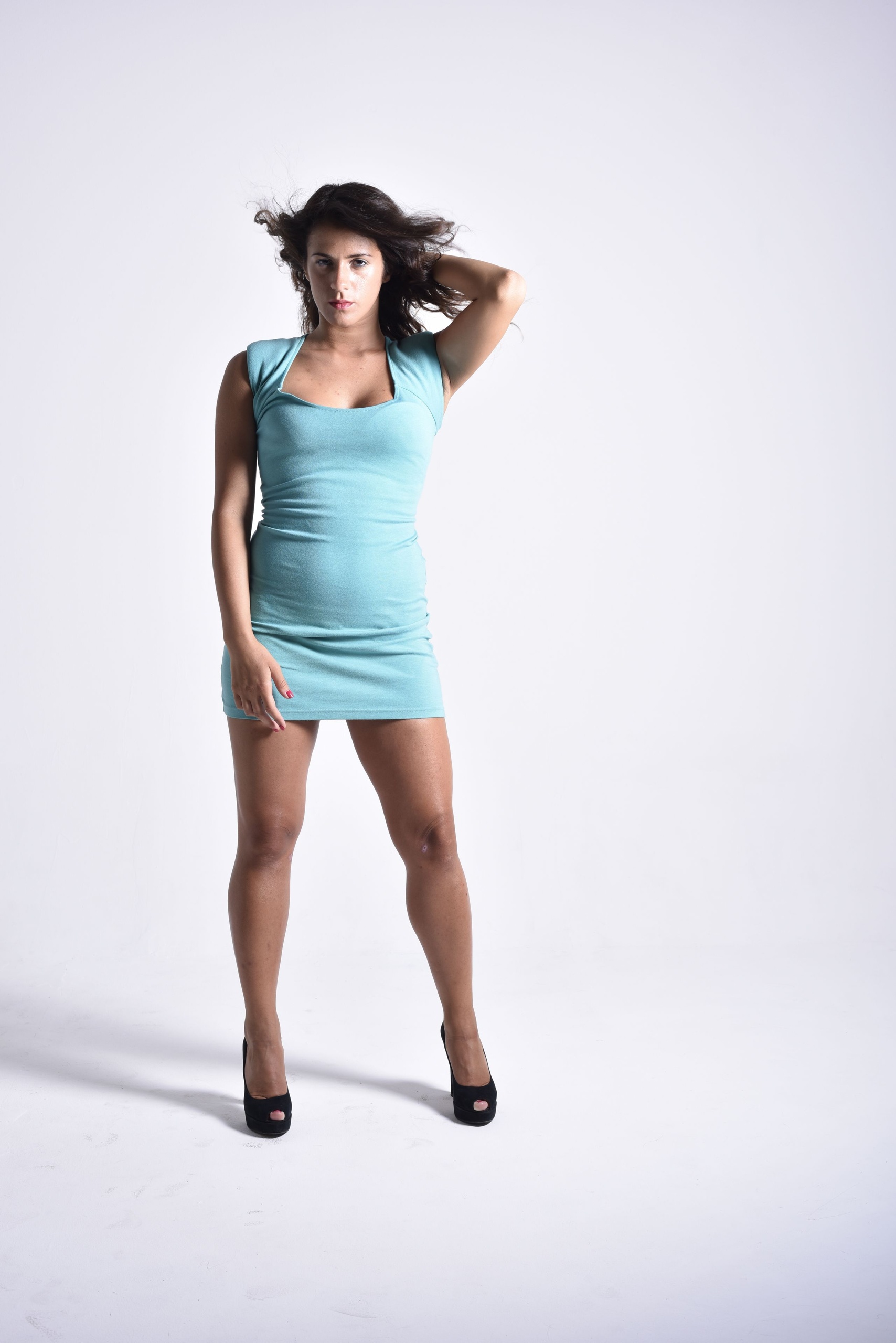
I would choose a reference with clear garment boundaries and even lighting, then identify the neckline, cuffs, side seams, and hem. If a dark coat merges into the background and its shoulder line disappears, even an attractive composition makes a poor structural baseline. The first image explains the whole garment; detail images add weave, buttons, and seams rather than repeating the same information.
Fabric names also need visible detail. 'Premium silk' is vague; describing soft sheen, light drape, and the distribution of folds gives me something to compare. Those details should come from product information and live-action references. I would not describe a blend as pure silk merely from its appearance. Weight, composition, and care instructions remain accurate written information; movement only represents visible appearance.
Person references establish hair, face, and styling. Is the shirt untucked, or is only its front tucked into the waistband? Where is the belt buckle? Each detail deserves a note. Garment and person references then have different tasks, making it easier to see what should remain consistent when the camera angle changes and what the original image does not show.
I would start from standing: the person gently shifts their weight once, arms resting naturally, while the hem briefly moves with the body and then settles. This rhythm lets me discuss how the hem falls and how the drape appears, with a pause to inspect the cut. Brisk walking, turns, and swinging a coat can come later. First make one action's beginning and end clear.
For a mid-length dress, I might write: 'The person wears the gray-blue dress in the reference, facing the camera. Keep the camera fixed where the shoulders and entire hem are visible. The person slowly shifts weight from the left foot to the right. The hem sways slightly and gradually settles. Follow the reference for waistline, dress length, and cuff construction. Folds change naturally with the movement. Maintain soft side light and a still background.' This is an objective that can be checked; every instruction to preserve something must be reviewed in the output.
The official Kling 4.0 guide lists stability in continuous action and consistency in person and product references as upgrade directions. The first relates to whether the hem follows body movement naturally; the second to whether the face, clothing color, and garment structure remain recognizable after a camera change. Both matter for a lookbook, but an official description cannot replace inspecting a particular garment.
I want to check specific questions: after a weight shift, does the waistline move upward? Does the knitted texture become smooth as the hem settles? A clear question lets the next round adjust the movement or reference. When structure changes, reducing movement, shortening its path, or choosing a clearer image is more useful than repeatedly adding 'absolutely no distortion.'
I would follow the shoulder line, neckline, waistline, and hem, checking silhouette and components before fabric. Button count, pocket placement, and sleeve lengths should match the reference. Moving fabric can form new folds, but a side seam cannot move somewhere else without reason. Ripples and reflections do not mean the fabric can become a different weave.
Before making a moving clothing sample, I would open the clothing sample creation entry. The website offers several credit reward activities: credits for new registrations, check-ins, and inviting new users, plus additional credits when an invited friend completes their first top-up. These activities help accumulate more creative credits. I would first try the shot that best shows the relationship between fabric and movement, then decide whether to expand the sequence.
These credits are not automatic daily payments and do not guarantee free 4.0 generation. Before submitting, I would check the selected model's current cost and limit the first sample to one action. When handing it to the editor, I would include the garment version, references, instruction, and usable interval. The finished piece should leave viewers remembering the clothing's lines and texture; that is the value of movement here.
Original video reference
The images throughout this article are visual references for composition, material, lighting, and production rhythm. They are not Kling 4.0 generated samples or records of personal tests.
I would choose a reference with clear garment boundaries and even lighting, then identify the neckline, cuffs, side seams, and hem. If a dark coat merges into the background and its shoulder line disappears, even an attractive composition makes a poor structural baseline. The first image explains the whole garment; detail images add weave, buttons, and seams rather than repeating the same information.
Fabric names also need visible detail. 'Premium silk' is vague; describing soft sheen, light drape, and the distribution of folds gives me something to compare. Those details should come from product information and live-action references. I would not describe a blend as pure silk merely from its appearance. Weight, composition, and care instructions remain accurate written information; movement only represents visible appearance.
Person references establish hair, face, and styling. Is the shirt untucked, or is only its front tucked into the waistband? Where is the belt buckle? Each detail deserves a note. Garment and person references then have different tasks, making it easier to see what should remain consistent when the camera angle changes and what the original image does not show.
I would start from standing: the person gently shifts their weight once, arms resting naturally, while the hem briefly moves with the body and then settles. This rhythm lets me discuss how the hem falls and how the drape appears, with a pause to inspect the cut. Brisk walking, turns, and swinging a coat can come later. First make one action's beginning and end clear.
For a mid-length dress, I might write: 'The person wears the gray-blue dress in the reference, facing the camera. Keep the camera fixed where the shoulders and entire hem are visible. The person slowly shifts weight from the left foot to the right. The hem sways slightly and gradually settles. Follow the reference for waistline, dress length, and cuff construction. Folds change naturally with the movement. Maintain soft side light and a still background.' This is an objective that can be checked; every instruction to preserve something must be reviewed in the output.
The official Kling 4.0 guide lists stability in continuous action and consistency in person and product references as upgrade directions. The first relates to whether the hem follows body movement naturally; the second to whether the face, clothing color, and garment structure remain recognizable after a camera change. Both matter for a lookbook, but an official description cannot replace inspecting a particular garment.
I want to check specific questions: after a weight shift, does the waistline move upward? Does the knitted texture become smooth as the hem settles? A clear question lets the next round adjust the movement or reference. When structure changes, reducing movement, shortening its path, or choosing a clearer image is more useful than repeatedly adding 'absolutely no distortion.'
I would follow the shoulder line, neckline, waistline, and hem, checking silhouette and components before fabric. Button count, pocket placement, and sleeve lengths should match the reference. Moving fabric can form new folds, but a side seam cannot move somewhere else without reason. Ripples and reflections do not mean the fabric can become a different weave.
Before making a moving clothing sample, I would open the clothing sample creation entry. The website offers several credit reward activities: credits for new registrations, check-ins, and inviting new users, plus additional credits when an invited friend completes their first top-up. These activities help accumulate more creative credits. I would first try the shot that best shows the relationship between fabric and movement, then decide whether to expand the sequence.
These credits are not automatic daily payments and do not guarantee free 4.0 generation. Before submitting, I would check the selected model's current cost and limit the first sample to one action. When handing it to the editor, I would include the garment version, references, instruction, and usable interval. The finished piece should leave viewers remembering the clothing's lines and texture; that is the value of movement here.
Original video reference